What Are Dark Web Markets and How They Operate
Dark web markets function as decentralized or centralized platforms where vendors and buyers connect through Tor, a network that masks IP addresses and location. Unlike clearnet e-commerce sites, these markets typically use cryptocurrency for transactions and employ escrow systems to reduce fraud between strangers. Vendors maintain reputation scores based on customer feedback, similar to mainstream marketplaces, but the anonymity layer removes traditional accountability.
Markets vary in size and scope. Some focus on specific product categories, while others operate as general-purpose bazaars. The infrastructure typically includes a marketplace frontend, vendor dashboards, dispute resolution forums and automated payment processing. Operators charge listing fees and take a percentage of each transaction, generating revenue while remaining pseudonymous. The technical complexity of running such a platform, combined with the constant threat of law enforcement takedowns, means that popular markets often operate for months or a few years before closure.
History of Major Dark Web Markets
The first widely known dark web market was Silk Road, launched in 2011 and shut down by the FBI in 2013 after its operator was identified and arrested. Silk Road demonstrated both the appeal and the vulnerability of centralized marketplaces. Its closure did not end the market ecosystem; instead, it accelerated the creation of successor platforms.
Alphabay and Hansa emerged as the largest markets in the mid-2010s, each handling thousands of transactions daily. Both were seized in coordinated law enforcement operations in 2017. Other notable markets included Dream Market, Wall Street Market and Versus Market, each with varying lifespans and closure circumstances. Some shut down voluntarily after exit scams, where operators absconded with customer funds and vendor deposits. Others were infiltrated by law enforcement or compromised by security breaches. The pattern shows that no market has achieved permanent status; longevity depends on operational security, vendor trust and the operator's ability to evade detection.
Why Users and Vendors Trusted Popular Markets
Users gravitated toward popular dark web markets because they offered perceived anonymity, access to goods unavailable on the clearnet, and a structured dispute resolution process. Vendors chose these platforms because they could reach a large customer base without traditional business licensing or banking relationships. Reputation systems created a form of trust in an environment where legal recourse is impossible.
Popular markets also invested in security features: multi-signature wallets to prevent operator theft, PGP-encrypted communications, and two-factor authentication. These measures were marketed as proof that the platform was legitimate and secure. However, the very anonymity that attracted users also made verification difficult. Buyers could not confirm vendor identity, and vendors could not verify buyer intent. This asymmetry of information created persistent friction and opened the door to scams, law enforcement infiltration and phishing attacks.
Law Enforcement Takedowns and Seizures
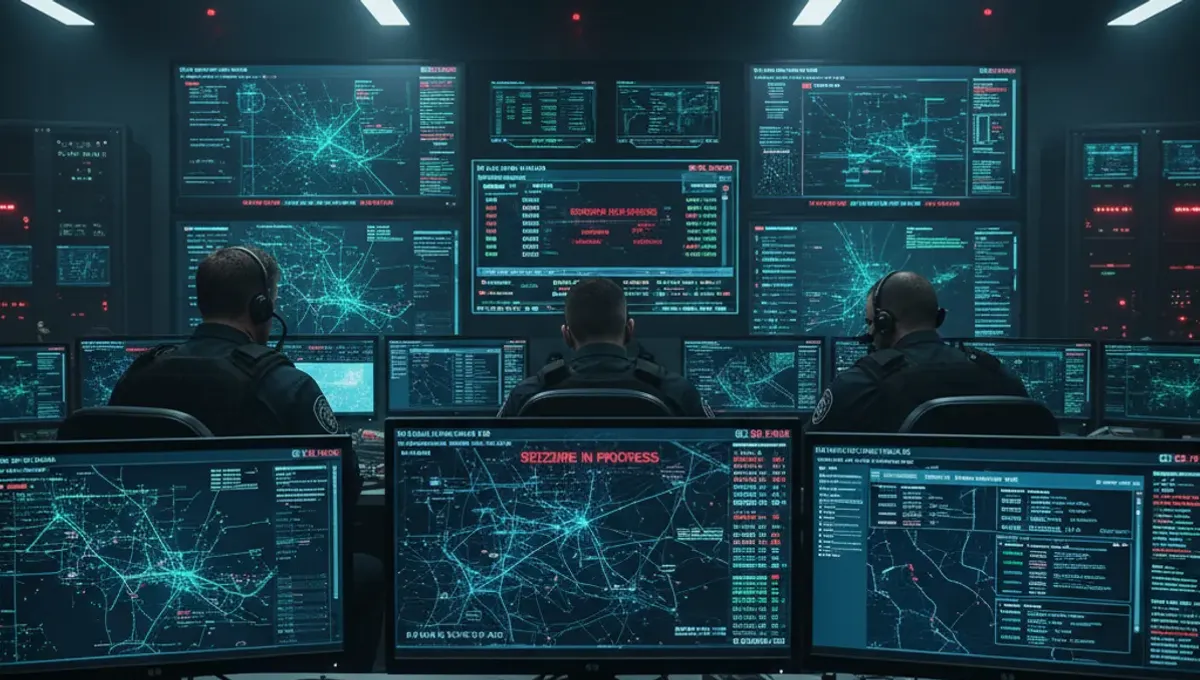
Law enforcement agencies, particularly the FBI, DEA and Europol, have successfully dismantled major dark web markets through a combination of technical investigation, undercover operations and international cooperation. Takedowns typically involve identifying the server location, obtaining warrants, and arresting operators or key administrators. In some cases, law enforcement has run seized markets undercover to gather evidence against vendors and buyers.
The Alphabay and Hansa seizures in 2017 were landmark operations that demonstrated law enforcement's growing capability to penetrate Tor-hosted infrastructure. Court records from these cases show that operators made operational security mistakes: reusing usernames across platforms, failing to compartmentalize their personal and criminal identities, and trusting third parties with sensitive information. These takedowns did not eliminate market demand; they simply shifted users to alternative platforms and reinforced the lesson that centralized markets are inherently vulnerable to law enforcement targeting.
Phishing Clones and How to Spot Them
One of the most dangerous consequences of popular dark web markets is the proliferation of phishing clones. When a market is seized or goes offline, scammers create fake versions that mimic the original's interface and branding. Users who access these clones believing they are the legitimate market may deposit cryptocurrency or enter credentials, which are then stolen.
Phishing clones exploit the fact that Tor addresses are long, random strings of characters that are difficult to memorize or verify by sight. A user searching for a market link on Reddit or a forum may find a clone link instead. To verify a legitimate onion address, check for PGP-signed announcements from the market operator on official channels or the site's Useful Resources page. Never rely on search results or third-party links alone. If you cannot find a cryptographically signed confirmation of the address, assume the link is compromised. This verification step is essential because once you send funds to a phishing clone, recovery is impossible.
The Reality of Dark Web Market Risks
According to Tor Project documentation on onion service security, centralized marketplaces face inherent risks because they create a single point of failure and a high-value target for law enforcement. This matters because users who believe they are transacting on a secure platform may face legal consequences if that platform is seized and user data is recovered. Court records from past market seizures show that law enforcement has successfully subpoenaed transaction logs, cryptocurrency addresses and user communications, leading to prosecutions.
Security vendor incident reports on darknet markets consistently document that operators and users make mistakes: reusing passwords, failing to use Tor Browser correctly, mixing personal and pseudonymous identities, and trusting unverified vendors. Academic research on onion services highlights that anonymity is not guaranteed; it depends on correct operational security at every step. Users who assume a dark web market provides complete anonymity are at risk of deanonymization through traffic analysis, metadata leakage or law enforcement investigation. This is why security experts emphasize that no market can promise absolute safety, and users should assume that any transaction could eventually be traced.
What Has Changed Since Major Market Seizures
After the takedowns of Alphabay and Hansa, the dark web market ecosystem fragmented. Some users migrated to decentralized markets or peer-to-peer platforms that do not rely on a central operator. Others returned to forums and smaller, less visible communities. The shift reflects a recognition that centralized markets are vulnerable, but it has not eliminated the market demand.
Operators have also adapted their security practices, though imperfectly. Some markets now use multi-signature wallets that require multiple parties to authorize withdrawals, reducing the operator's ability to steal funds unilaterally. Others have implemented dead man's switches that release encryption keys if the operator is arrested. However, these measures do not protect against law enforcement infiltration or technical vulnerabilities. The fundamental tension remains: a market must be accessible enough to attract users, but accessibility creates security risks. Every popular dark web market that has emerged since 2017 has faced the same pressure, and none has solved this problem permanently.
Staying Safe: Verification and Operational Security
If you are researching dark web markets for security awareness or academic purposes, the priority is verification and compartmentalization. Before accessing any onion address, confirm it through multiple independent sources, preferably PGP-signed announcements from the operator.
Key steps to follow:
- Use Tor Browser from the official Tor Project website only.
- Verify the onion address against PGP-signed announcements on the site's Useful Resources page.
- Never reuse usernames, passwords or personal information across platforms.
- Assume that any transaction could eventually be traced through blockchain analysis or law enforcement investigation.
- Do not assume anonymity is guaranteed; it depends on correct operational security at every step.
If you suspect you have accessed a phishing clone or lost funds to a scam, do not send additional money. Report the incident to the Internet Crime Complaint Center or your local law enforcement agency. The most important takeaway is that popular dark web markets are not stable, trustworthy or safe; they are targets for law enforcement and scammers alike. Understanding how they work is valuable for security awareness, but participation carries significant legal and financial risk.
Common Questions
Are dark web markets still operating
Yes, new markets emerge regularly, but most popular ones are eventually seized by law enforcement or shut down by operators. The status of any specific market changes frequently, so you should verify current information through PGP-signed announcements rather than relying on outdated sources. No market has achieved permanent operation.
How do I know if a dark web market link is real or a phishing clone
Verify the onion address against PGP-signed announcements from the operator on official channels or the Useful Resources page. Never trust links from Reddit, forums or search results alone. If you cannot find a cryptographically signed confirmation, assume the link is compromised and do not access it.
What happened to Alphabay and Silk Road
Silk Road was shut down by the FBI in 2013, and its operator was arrested and convicted. Alphabay was seized in a coordinated international law enforcement operation in 2017. Both closures demonstrated that centralized dark web markets are vulnerable to law enforcement targeting, regardless of their security measures.
Can I be traced if I use a dark web market
Anonymity on the dark web depends on correct operational security at every step. Law enforcement has successfully traced users through blockchain analysis, metadata leakage, operational security mistakes and infiltration of markets. You should assume that any transaction could eventually be traced and that participation carries legal risk.
Why do dark web markets get shut down so quickly
Centralized markets create a single point of failure and a high-value target for law enforcement. Operators also make security mistakes, such as reusing usernames or failing to compartmentalize their identities. Law enforcement agencies have developed sophisticated techniques to identify server locations and infiltrate platforms, making long-term operation increasingly difficult.