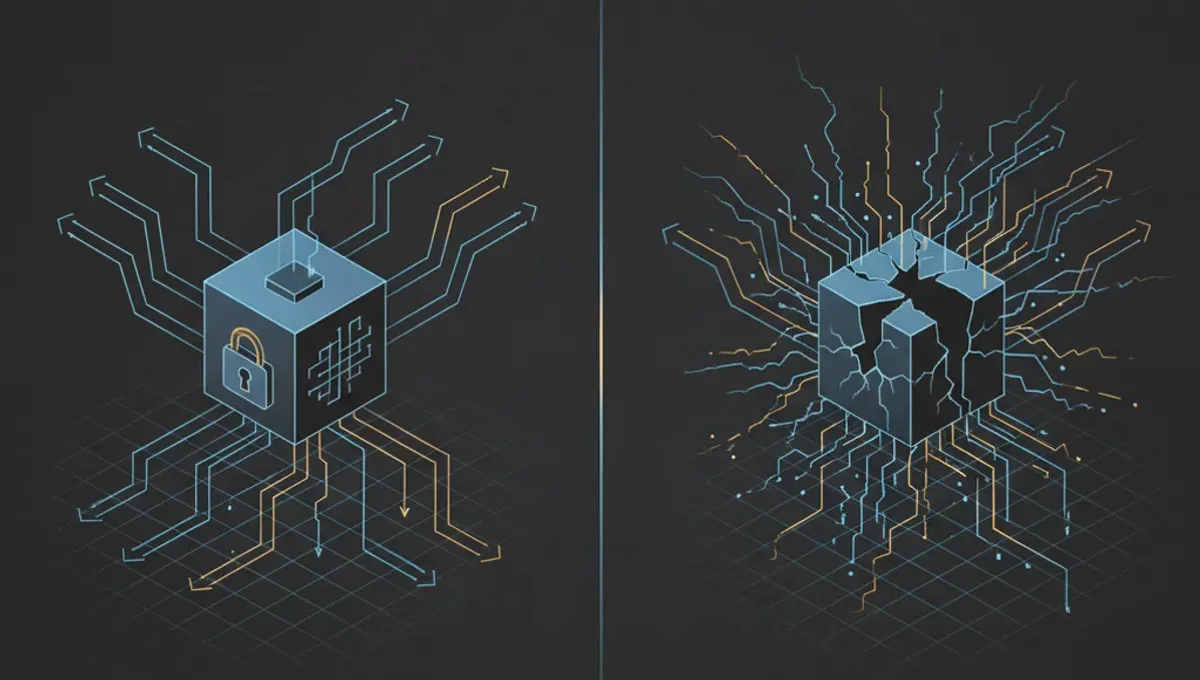
What Is a Dark Web Escrow Service
A dark web escrow service acts as a temporary holder of cryptocurrency during a transaction between two anonymous parties. The buyer sends funds to an address controlled by the escrow service rather than directly to the seller. Once the buyer confirms receipt and satisfaction with the goods or service, the escrow releases the payment to the seller. This arrangement theoretically protects both parties: the buyer avoids losing money to a scammer, and the seller avoids non-payment after delivery.
However, the escrow operator themselves becomes a single point of failure. If the operator disappears, gets compromised, or is seized by law enforcement, all held funds are at risk. Many darknet markets have integrated escrow as a built-in feature rather than using standalone services, giving the marketplace operator control over dispute resolution. This creates a conflict of interest, since the marketplace profits from transaction volume and may favor sellers or take sides arbitrarily.
How Darknet Markets Used Escrow Mechanisms
Historically, major darknet marketplaces like Silk Road, AlphaBay, and Dream Market all featured escrow systems as core infrastructure. Buyers would deposit cryptocurrency into their marketplace account, which functioned as an escrow wallet. When a purchase was made, funds moved into a holding state. The seller had a deadline to ship the item. Once the buyer received it and marked the transaction complete, the funds released to the seller's account.
Dispute resolution was handled by marketplace moderators or automated rules. If a buyer claimed non-delivery, the marketplace would investigate or automatically refund the buyer after a timeout period. Some markets allowed sellers to appeal disputes. The escrow system reduced but did not eliminate fraud: sellers could ship fake or low-quality goods, buyers could falsely claim non-delivery, and marketplace operators could selectively freeze accounts or steal held funds. Exit scams, where a marketplace suddenly shut down and kept all escrow balances, became a recurring pattern in darknet market history.
Why Escrow Matters in Anonymous Transactions
In normal e-commerce, payment processors, credit card companies, and legal systems provide buyer protection. On the dark web, none of these exist. Buyer and seller cannot identify each other, cannot sue each other, and cannot appeal to a regulator. Escrow fills this gap by introducing a trusted intermediary, though that intermediary is itself anonymous and unaccountable.
The escrow service must be perceived as neutral to function. If buyers believe the operator favors sellers, they will not use the service. If sellers believe the operator will side with false claims, they will not participate. This creates a reputational economy: an escrow operator's value depends entirely on a track record of fair dispute handling. Yet reputation on the dark web is easily faked through sockpuppet accounts and false reviews. A new escrow service can build apparent credibility quickly, then exit scam after accumulating enough deposits. This dynamic has repeated across dozens of failed markets and services.
Risks and Common Failure Points
Several structural risks plague dark web escrow services. First, the operator can disappear with all held funds at any time. There is no insurance, no regulatory backstop, and no way to recover lost cryptocurrency. Second, if the service is compromised by hackers, all wallet keys and balances may be stolen. Third, law enforcement can seize the service's infrastructure and freeze or confiscate all held funds, leaving users with no recourse.
A fourth risk is that escrow operators themselves may be honeypots run by law enforcement to identify and track users. By depositing cryptocurrency into a known escrow address, a user creates a transaction record that can be analyzed on the blockchain. Even though cryptocurrency addresses are pseudonymous, blockchain analysis firms and law enforcement agencies have become skilled at linking addresses to real identities over time. Users who assume escrow is anonymous may be exposing themselves to deanonymization risk. Additionally, disputes are often resolved arbitrarily or corruptly, with operators favoring repeat customers or taking bribes from sellers.
Escrow Versus Other Payment Models
Some darknet markets have experimented with alternatives to escrow. Finalize Early (FE) systems allow sellers to receive payment immediately upon order confirmation, before delivery. This eliminates escrow risk for the seller but exposes the buyer to total loss if the seller never ships. Multisignature cryptocurrency transactions require both buyer and seller to sign off on a release, removing the need for a third-party operator. However, multisig requires technical knowledge and can be complicated if a dispute arises.
Direct payment to the seller, with no intermediary, is fastest but offers no protection to either party. Some markets have used reputation systems and vendor bonds, where sellers must deposit collateral to gain selling privileges, incentivizing good behavior. None of these models are perfect. Escrow remains the most common because it balances risk, even though it introduces the operator as a new vulnerability. The choice of payment model reflects the market operator's priorities: protecting buyers, protecting sellers, or maximizing transaction speed and volume.
Reality Layer: How Escrow Actually Fails
According to Tor Project documentation on onion service security, hidden services can be seized or taken offline by law enforcement, and the operators can be identified through traffic analysis and operational security mistakes. This matters because users who rely on an escrow service for financial protection may lose access to their funds if the service is shut down.
Public law-enforcement press releases and court records from darknet market prosecutions show that escrow balances are frequently seized as criminal proceeds. Users who had funds held in escrow when a market was shut down typically have no legal claim to recover them, even if they were not themselves engaged in illegal activity. Security-vendor incident reports on darknet market breaches document cases where escrow wallets were stolen by hackers who compromised the marketplace infrastructure. Academic research on onion services highlights that reputation systems and dispute resolution on the dark web are vulnerable to manipulation, since there is no way to verify the identity or neutrality of an operator or moderator. This matters to readers because it shows that escrow is not a reliable substitute for legal protections and formal financial regulation.
Verifying Escrow Legitimacy and Avoiding Clones
Phishing clones of legitimate darknet services are extremely common. A scammer can create a nearly identical copy of a marketplace or escrow service, host it on a different .onion address, and trick users into depositing funds. To verify a service is genuine, users should only access it through official announcements, PGP-signed statements from the operator, or trusted community forums where the address has been verified by multiple independent sources.
Before depositing any funds, check whether the service has a published PGP key and whether recent announcements are signed with that key. Look for consistency in the operator's communication style, posting history, and response times. Be skeptical of new services with perfect reviews or services that suddenly change their terms or ask for additional verification. If a service claims to be offline for maintenance, verify this claim on multiple independent sources before returning. Never assume a .onion address is legitimate just because it appears in a search result or forum post. The dark web search service results and forum recommendations are themselves vulnerable to manipulation and phishing.
What You Should Do Instead
If you are considering using a dark web escrow service, first ask whether the transaction is necessary. Many activities that people turn to the dark web for can be accomplished through legal channels with proper privacy tools. If you do proceed, use a VPN or Tor browser to access the service, and never reuse usernames or passwords across services. Keep the amount deposited as small as possible, and withdraw funds immediately after the transaction completes.
Do not assume that using an escrow service makes you anonymous or safe from law enforcement. Cryptocurrency transactions are traceable on the blockchain, and law enforcement agencies have become increasingly skilled at linking addresses to real identities. If you are concerned about your financial privacy, consult resources from the Tor Project and established privacy organizations rather than relying on the promises of anonymous service operators. Consider whether the risk of loss, legal exposure, or identity compromise is worth the benefit you are seeking. In most cases, the answer is no.
Common Questions
What happens to my money if a dark web escrow service shuts down
Your funds are typically lost. Dark web escrow services are unregulated and uninsured. If the operator disappears, is arrested, or the service is seized by law enforcement, you have no legal recourse to recover your money. This is one of the primary risks of using these services.
Can I be traced if I use a dark web escrow service
Yes. Cryptocurrency transactions are recorded on the blockchain and can be analyzed by law enforcement and blockchain analysis firms. Even though your identity may not be immediately obvious, transactions to known escrow addresses can be linked to you over time through various investigative techniques.
How do I know if a dark web escrow service is a phishing clone
Verify the .onion address through multiple independent sources, check for PGP-signed announcements from the operator, and look for consistency in communication and response times. If the address is new, the reviews are suspiciously perfect, or the operator is asking for unusual verification steps, treat it as potentially fake.
Is a dark web escrow service safer than direct payment
Escrow reduces the risk of seller non-delivery, but it introduces the operator as a new point of failure. The operator can steal your funds, be compromised by hackers, or be seized by law enforcement. Neither option is truly safe.
What is the difference between escrow and multisignature transactions
Escrow relies on a third-party operator to hold and release funds. Multisignature requires both buyer and seller to cryptographically approve a transaction. Multisig eliminates the operator but requires technical knowledge and can be complicated if disputes arise.